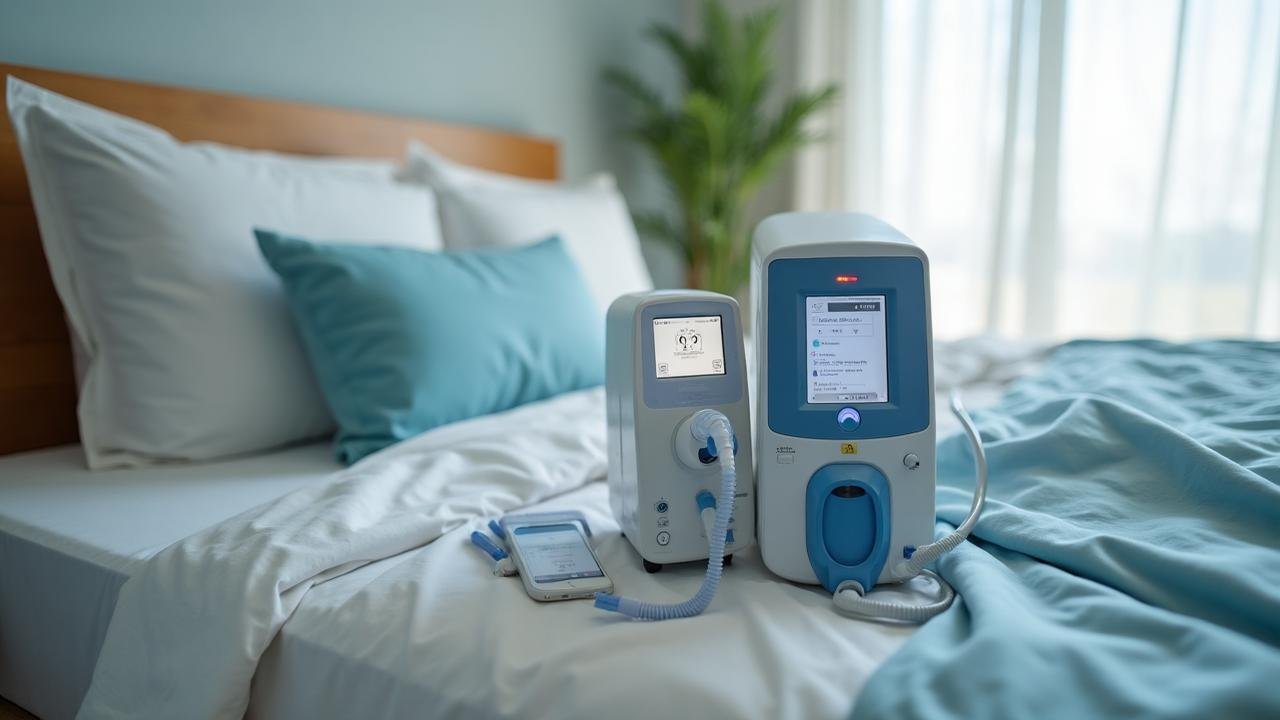
Understanding Sleep Apnea
Sleep apnea is a serious sleep disorder affecting millions of people worldwide, characterized by repeated interruptions in breathing during sleep. These pauses can last from a few seconds to minutes and may occur 30 times or more per hour. Left untreated, sleep apnea can lead to serious health complications including hypertension, heart disease, stroke, and diabetes.
What is CPAP Therapy?
Continuous Positive Airway Pressure (CPAP) is the gold standard treatment for obstructive sleep apnea (OSA). A CPAP machine delivers a steady stream of pressurized air through a mask, keeping the airways open throughout the night.
How CPAP Works
The CPAP device consists of three main components:
- Motor: A small compressor that generates pressurized air at the prescribed pressure level
- Hose: A flexible tube that carries the pressurized air from the machine to the mask
- Mask: An interface that fits over your nose, mouth, or both, delivering the air pressure
Benefits of CPAP
- Eliminates snoring and breathing pauses during sleep
- Improves daytime alertness and concentration
- Reduces risk of cardiovascular complications
- Enhances overall quality of life and mood
- Single pressure setting makes operation simple
What is BiPAP Therapy?
Bilevel Positive Airway Pressure (BiPAP) is an advanced form of positive airway pressure therapy that delivers two different pressure levels: a higher pressure during inhalation (IPAP) and a lower pressure during exhalation (EPAP).
How BiPAP Differs from CPAP
While CPAP provides constant pressure throughout the breathing cycle, BiPAP alternates between two pressure settings:
- IPAP (Inspiratory Positive Airway Pressure): Higher pressure helps you inhale more easily
- EPAP (Expiratory Positive Airway Pressure): Lower pressure makes exhaling more comfortable
When BiPAP is Recommended
Your sleep specialist may prescribe BiPAP if:
- You cannot tolerate CPAP due to difficulty exhaling against constant pressure
- You have central sleep apnea or complex sleep apnea syndrome
- You require high pressure settings (above 15-20 cm H₂O)
- You have underlying lung conditions like COPD that make breathing difficult
- You experience carbon dioxide retention
Key Differences: CPAP vs BiPAP
Pressure Delivery
CPAP: Delivers one continuous pressure level
BiPAP: Alternates between two pressure levels for inhalation and exhalation
Comfort
CPAP: Some users find exhaling against constant pressure challenging
BiPAP: Generally more comfortable for those who struggle with CPAP, especially at higher pressures
Cost
CPAP: More affordable, typically ranging from ₹25,000-₹45,000
BiPAP: More expensive due to advanced technology, typically ₹60,000-₹1,50,000
Applications
CPAP: Primarily used for obstructive sleep apnea
BiPAP: Used for complex sleep apnea, central sleep apnea, and other respiratory conditions
Choosing the Right Therapy
The decision between CPAP and BiPAP should be made in consultation with your sleep medicine specialist based on:
- Sleep Study Results: Your polysomnography (sleep study) will reveal the type and severity of your sleep apnea
- Pressure Requirements: Higher pressure needs may warrant BiPAP therapy
- Comfort and Tolerance: If you've tried CPAP and found it intolerable, BiPAP may be a better option
- Underlying Health Conditions: Conditions like COPD, heart failure, or neuromuscular diseases may require BiPAP
- Budget Considerations: While effectiveness should be the primary concern, cost is also a practical factor
Tips for Success with PAP Therapy
Whether you're using CPAP or BiPAP, these strategies can help ensure successful treatment:
- Choose the Right Mask: Try different mask styles (nasal pillows, nasal masks, full-face masks) to find the most comfortable fit
- Use a Humidifier: Many PAP machines include built-in humidifiers to prevent dryness and irritation
- Gradual Adaptation: Start by using your device for short periods during the day to get comfortable with the sensation
- Maintain Equipment: Clean your mask daily and replace filters, tubing, and masks as recommended
- Track Your Progress: Many modern devices offer smartphone apps to monitor your therapy adherence and effectiveness
- Stay Connected with Your Provider: Regular follow-ups ensure your pressure settings remain optimal and address any concerns
Conclusion
Both CPAP and BiPAP are highly effective treatments for sleep apnea and related conditions. While CPAP remains the first-line treatment for most patients with obstructive sleep apnea, BiPAP offers an excellent alternative for those who need it. The key to successful therapy is working closely with your healthcare team to find the right solution and maintaining consistent use of your prescribed device.
At TCH Medical, we provide comprehensive sleep therapy solutions, including a wide range of CPAP and BiPAP machines, masks, and accessories, along with expert guidance to ensure you receive the most effective treatment for your individual needs.